Patient Navigator Support

Helping English-speaking residents navigate healthcare with confidence.

Navigating the health care system can feel overwhelming, especially for English-speaking community members in the Montérégie Centre. That’s where our patient navigation program steps in. Our dedicated navigator serves as a trusted guide, ensuring that patients are not alone on their journey. We provide clear information, compassionate emotional support, and practical help every step of the way.

What is Patient Navigation?

Patient navigation helps those facing obstacles in interacting with the health care system. Whether it’s language, unfamiliarity with the health system, or the added complexity of geography and culture. Navigators step in to smooth the process, making it easier for patients to get the information and support they need to move forward with confidence in their care.

The Role of a Patient Navigator

Their role includes guiding patients through appointment logistics, assisting with medical forms, and ensuring that key health information is clearly communicated. Navigators also act as a bridge between patients and healthcare providers, offering accompaniment to appointments when necessary and providing emotional support to patients and their families.

HOW WE SUPPORT YOU

Appointment support

Appointment logistics, navigating hospitals, medical forms, and understanding health information

Liaison with providers

Act as a liaison between English-speaking patients and health and social services providers

Emotional support

Offer moral support throughout your healthcare journey

Identify barriers

Identify and address barriers to help users access services

Getting the ball rolling

Help you take the next steps and connect with the right services

Outreach and advocacy

Promotion, outreach, advocacy, collaboration, and client records/data collection
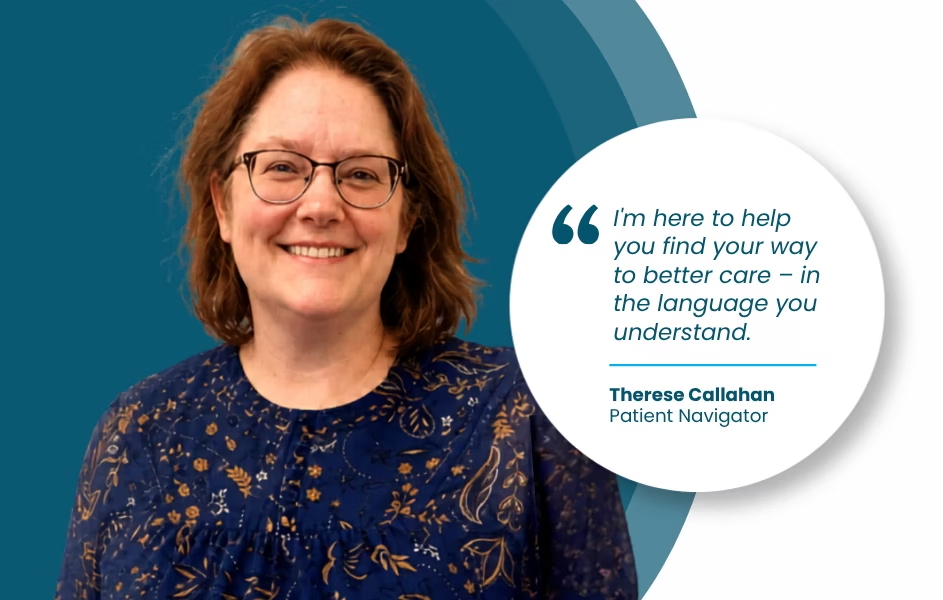
Meet Our Patient Navigator

Meet Therese Callahan, ARC’s Patient Navigator! Therese has worked for ARC since 2022 as a community outreach coordinator and mental health liaison agent. She has been involved in the creation of several resource guides that have helped orient people towards community resources and solutions. Always a good listener and invested in the user’s outcome, she helps overcome roadblocks, find ways forward, and ensure users find what they’re looking for.

  • (438) 459-1549

Frequently Asked Questions

The program is available to individuals or families who need help finding or accessing health and social services. Whether you’re looking for a family doctor, mental health support, senior services, or community resources, a Patient Navigator can help connect you with the right services.

No. The Patient Navigator Program is free and confidential.

No. Patient Navigators do not provide medical advice or diagnoses. They help you understand your options, connect you with appropriate services, and guide you through the healthcare system.

We are unable to drive you to your appointment but we can help you coordinate with organizations that offer medical transportation. We will meet you at your appointment and follow up after the appointment to make sure that your needs are met.

No. You can contact the Patient Navigator Program directly—no referral is required. Family members, caregivers, and healthcare professionals may also make referrals with your consent, where appropriate.

Yes. Family members, friends, and caregivers are welcome to contact us to discuss available services or request support, provided we obtain appropriate consent when necessary.

Yes. Your personal information is handled confidentially and is only shared when necessary and with your consent, in accordance with applicable privacy regulations.

Patient Navigators can help you understand how to access services and may assist you in connecting with providers or completing referrals. However, they do not typically book medical appointments directly unless this is part of the program’s scope.

Yes. If you’re a caregiver, family member, or friend supporting someone who needs help accessing health or social services, we can provide information, guidance, and referrals to help you navigate available resources.

Our Patient Navigator Program serves individuals living within our designated territory. However, if you live outside our service area, you may still be able to access support through another Patient Navigator Program in your region.

The Community Health and Social Services Network (CHSSN) coordinates a Patient Navigation Network across Québec to help English-speaking individuals access health and social services. To find a Patient Navigator near you, visit the CHSSN Patient Navigation Network page: Patient Navigation Network

If you are unsure which organization can support you, you can still contact us, and we will do our best to help guide you toward the appropriate resource.

A Patient Navigator CANNOT:

While we are here to help, there are some things a Patient Navigator cannot do. These include:

  • Provide interpretation or translation services.

  • Diagnose medical conditions or provide medical advice.

  • Prescribe or recommend medications or treatments.

  • Give legal or financial advice.

  • Make healthcare decisions on a client’s behalf.

  • Guarantee appointments, services, or outcomes.

  • Access or share personal health information without the client’s consent.

  • Provide counselling, emergency intervention, or personal caregiving.

  • Complete clinical assessments or perform medical procedures.